INDIAN Politics
The Ancient Politics of India from the britishers era till today
2/27/20263 min read
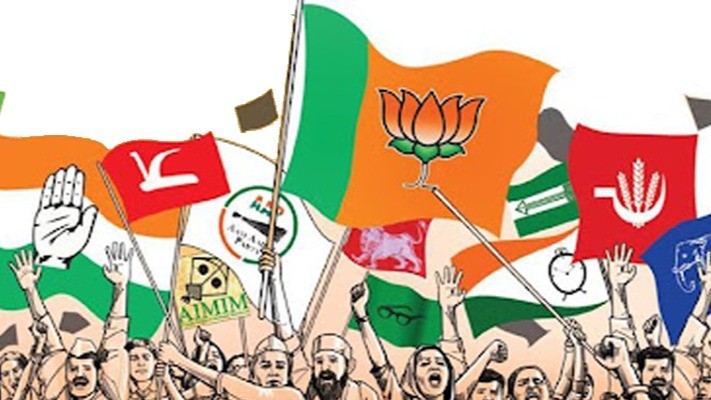
Part 1 — The Congress and the Mind Politics of India
India gained independence in 1947 — but the politics of India began long before that, when Mahatma Gandhi returned to India.
Gandhi is often remembered as the father of the nation, but I see him as something more complex — not just a man of peace, but also a master of political strategy.
He knew that independence would never come through non-violence alone. The British Empire did not fear peace — it feared power. Gandhi’s real genius was that he used non-violence as a weapon of influence.
He fought violence with silence and turned emotion into control. I do not agree with Gandhi’s every action, but I respect his sharp mind. His goal was not only India’s freedom — it was also to establish the Indian National Congress as the ruling power of free India.
That is why Gandhi played what I call “mind politics.” He spoke of peace but operated through influence — shaping events through his statements, his timing, and his understanding of people. Look at the history carefully: Gandhi feared that after independence, the Hindu Mahasabha, supported by many young patriots, might gain power.
To prevent that, he allowed the situation that ultimately led to his own death — a moment that turned Gandhi into a martyr and permanently secured the moral victory of the Congress Party. Now ask yourself.
Why did Gandhi remove his own security when he already faced threats? Why did his death immediately open the path for Nehru’s government? Because his passing united the country emotionally — and emotionally united people are easy to lead politically. This is what I call mind politics — controlling the nation through emotion.
Part 2 — The Shadow Politics of Power Many young heroes —
Bhagat Singh, Sukhdev, Rajguru, Chandrashekhar Azad — fought with their hearts, but they never understood Gandhi’s political strategy.
Their passion was pure, but Gandhi’s politics was psychological. Gandhi’s speeches could move millions — but behind those speeches was also a game of control, a calculated understanding of British intentions.
He knew that if Bhagat Singh or Chandrashekhar Azad lived long enough, they would never accept a Congress government. They would demand a true people’s revolution, not a political transfer of power. And that is why their paths were never allowed to continue. Gandhi’s influence, combined with Nehru’s ambition, decided the future of India’s leadership.
Sardar Patel, though loved by the people, never became Prime Minister — because the stage had already been set for Nehru.
Part 3 — Ambedkar, Patel, and the Power Game
When Gandhi needed the support of the Dalit community, he called upon Dr. B. R. Ambedkar, the one man whom Dalits trusted without question.
Ambedkar initially opposed Gandhi’s ideas but was drawn into the Congress web through persuasion and political necessity. Like Patel, Ambedkar trusted Gandhi’s intentions — but Gandhi and Nehru’s goal was power after independence, not balance.
The truth is, the Partition of India was not just a British decision — it was also a failure of Gandhi’s leadership. He had the power to prevent it; his ability to persuade people was unmatched. Yet, he never tried to convince Muhammad Ali Jinnah or the Muslim League strongly enough, because that might have cost the Congress its future rule.
If Sardar Patel had been made Prime Minister, India might not have been divided. But Gandhi wanted Nehru to lead — and for that, he accepted the cost of Partition.
Part 4 — The Legacy of Political Manipulation
After Gandhi’s death and the rise of Nehru, Congress began what I call “the real politics” of independent India. The manipulation continued — in the deaths of great leaders like Patel, the imprisonment of Hindu Mahasabha and RSS workers, the creation of Article 370, and the misuse of reservation policies.
Dr. Ambedkar had originally stated that the reservation policy should last only 10 to 15 years, and then be reviewed. But Nehru and later governments never wanted caste divisions to disappear — because caste votes became political power.
Every party that followed Congress learned this game: to rule India, you don’t need to unite the people — you only need to divide them smartly.
Part 5 — The Call for a New Generation
Politics in India today is not about serving the nation; it is about sustaining power. But this cannot last forever. The youth of India — educated, aware, and fearless — must now step forward to rebuild the democracy that our ancestors dreamed of.
We must honor our heroes — Bhagat Singh, Ambedkar, Patel, and all who sacrificed for truth — not by repeating their struggles, but by fulfilling their unfinished dreams.
India needs not just leaders, but visionaries — people who think beyond parties, beyond religion, and beyond caste.
If politics today is a game of minds, then let our youth play it with clarity, honesty, and courage — for the sake of a new India where truth, not tactics, decides who leads.
Conclusion
Mahatma Gandhi gave India freedom — but his politics gave birth to manipulation. Dr. Ambedkar gave us the Constitution — but politics turned it into a vote machine. Today, the time has come for a second freedom — not from foreign rulers, but from the invisible chains of caste, corruption, and political deceit. Let us rise not as upper or lower castes, not as parties or religions — but as Indians. That is the true independence India still awaits.