Insights from Ingrooww Consultancy's Latest Research
Dive into thoughtful analysis on India's markets, geopolitics, and history, blending real estate expertise with sharp political insights.
10/30/20244 min read
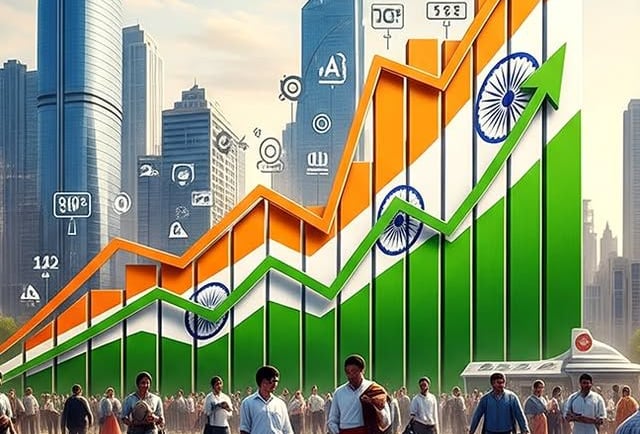
When it comes to the economy, many self-proclaimed financial influencers and "experts" often portray India as a non-growing or unstable economy. But history and hard data tell a different story one of resilience, reform, and resurgence. India's journey toward becoming a global economic powerhouse didn't begin yesterday; it began decades ago, with visionary decisions and enduring strength that have helped the nation weather every global storm.
1. The Foundation of India's Economic Growth
India's transformation began long before the modern digital revolution. In 1991-92, when the nation faced a severe economic crisis, then-Finance Minister Dr. Manmohan Singh and Prime Minister P.V.Narasimha Rao opened the doors of the Indian economy to the world. Their landmark liberalization reforms invited global giants such as Honda, Suzuki, and Hyundai in the automotive sector, and CitiBank and JP Morgan in finance.
These policy decisions marked the birth of a new India - one open to innovation, competition, and foreign investment. Despite challenges, India's economy began to grow rapidly, backed by a young population, strong domestic demand, and a rising entrepreneurial spirit.
Even after the 2008 global financial crisis, India, under the leadership of Dr. Singh, demonstrated economic prudence. His bold fiscal and monetary measures ensured stability at a time when many developed economies were collapsing.---
2. Post-COVID Resilience and Market Boom
Market activity. The NIFTY and SENSEX reached record highs, driven by renewed investor confidence, digital adoption, and domestic innovation.
However, the global stage soon shifted again. Political instability in the Middle East, the ongoing Russia-Ukraine war, and rising tensions in the Indian subcontinent - including incidents such as the Pahalgam conflict - caused volatility in global and Indian markets. Yet, India remained a standout performer among emerging economies, demonstrating its capacity to rebound stronger from global disruptions.---
3. The Tariff Politics: The Trump Factor
One of the major headwinds for India's trade relations has been U.S. tariff policies.
U.S. President Donald Trump's administration imposed heavy tariffs on Indian goods, citing India's purchase of Russian oil as justification.
Yet, European nations continued similar transactions with Russia without facing equivalent penalties - a clear double standard.
Such selective sanctions reveal the deeper agenda of global powers - maintaining economic dominance in Asia, where India and China are rising as self-reliant forces.
When powerful nations face challenges to their influence, economic pressure becomes their primary tool.---
4. The BlackRock-Jio Equation and Financial Sovereignty
Another issue that deserves attention is the growing influence of global financial giants like BlackRock in Indian markets. BlackRock, the world's largest asset management company, holds stakes in numerous multinational corporations across sectors - from technology to infrastructure.
The recent partnership between Jio and BlackRock has raised concerns about data security and market manipulation. When an entity with such massive financial power gains access to India's financial ecosystem, the potential for undue influence and control cannot be ignored.
While partnerships with global institutions can bring expertise and capital, they must not compromise India's financial sovereignty. The Indian market must remain transparent, secure, and accountable to its people - not to external players driven by profit and control.---
5. The Hidden Game Behind Global Markets
The United States, with its massive debt and declining dominance, often uses market sentiment and media narratives to influence global investment flows.
One pattern that has emerged repeatedly is the artificial creation of crises - pushing investors toward U.S. Treasury Bonds, which are marketed as "safe havens."
Simultaneously, the U.S. maintains one of the largest gold reserves in the world. A rising gold price benefits its balance sheet, but when prices climb too high, the U.S. can strategically sell its gold to stabilize domestic inflation - while developing nations bear the losses of market manipulation.
This cycle of artificial market movements, supported by global monopolies and financial conglomerates, has widened the economic gap between the West and the rest of the world.
For India, the lesson is clear: build strength from within, and reduce dependency on foreign systems of valuation and control.---
6. Domestic Challenges: Governance, Education, and Priorities
While global influence poses external challenges, India's internal reforms must also keep pace. The middle class - the backbone of our economy - continues to bear a heavy tax burden with limited returns in infrastructure, education, and social equity.
Government initiatives such as the Ethanol Blending Program and subsidies for select corporations have sparked debates over transparency and political favoritism.
Meanwhile, key sectors like education and healthcare often receive inadequate attention despite being the foundation of sustainable growth.
True reform requires not just policy changes but a shift in mindset - away from short-term political gain and toward long-term national development.---
7. Rethinking Education: Back to the Gurukul Spirit
One of the greatest long-term investments India can make is in education. Our ancient Gurukul system emphasized holistic development - not just academic knowledge but discipline, values, spirituality, and practical life skills.
Modern India must integrate that philosophy into contemporary learning.
By nurturing moral, emotional, and intellectual intelligence together, we can create citizens who are not only skilled but also responsible, ethical, and visionary.
When education becomes purpose-driven rather than exam-driven, the nation's social and economic transformation follows naturally.---
8. Conclusion: The Path Forward
India's economic journey has always been defined by resilience and reform. From the 1992liberalization to post-COVID recovery, the nation has faced every global challenge with strength andinnovation. But to truly realize its potential, India must guard against external manipulation, ensureinternal accountability, and empower its people through education and opportunity.The real growth story of India is not just about GDP figures or stock market highs. It is aboutself-reliance, ethical leadership, and the vision to create a nation that stands tall - economically,culturally, and morally - beyond the influence of global powers.